 What motivates someone to spend hundreds of hours attempting to prove a conspiracy (like those who think 9-11 was the work of the United States) when no matter what they tend to prove their efforts go nowhere? Is it ego? Is it the concept of “I told you so”? Because realistically all the time and effort and examination of this and that and the general outcome is usually “who cares?”. Really, who cares? I say it doesn’t change a thing. Is any of this “proof’ that the government was involved in killing it’s own citizens really going to change anything? Is there a smoking gun out there that will cause the whole government to be indicted? Or change the way men behave in general. You think if the government was indicted and convicted the next set of rulers would suddenly be a moral bunch? What’s the goal of proving a conspiracy (or even believing in a conspiracy)? There’s so many and I don’t see any real goal. How about that New World Order? When they finally prove it exists it will probably be too late - don’t you think? They’ll be some announcement in the New York Times indicating: “NWO ANNOUNCES ONE WORLD GOVERNMENT - MARSHALL LAW IMPOSED”. And when it happens some guy will stand up and say, “I told you so”. Again, even in retrospect, who cares? Im my humble opinion, all of this type of mystery proving behavior is really worthless. Take for instance those people who are obsessed with the end of the world. And in case you didn’t know about these people, all you need to do is Google “end of time” to see what they’re up to. One theory is some planet (often called planet X as either dark matter or invisible or currently unknown and yet undiscovered) is hurling toward us toward our doom and gloom. Again, if it is and they can prove it is - who cares? What’s the difference? See I told you we were all going to die from the great Planet X. Again, it must be ego. Then there are those pesky date doomsday lovers. Many believe 2012 is some mystical year of destruction. And in fact there’s 2009, 2010, 2011 (probably 3012) and some handful of other randomly picked years when it’s “definitely” all over for us. Unfortunately, the past dire predications never got there so there’s a need for new ones all the time. In case you forgot there was the year 2000 when all the computers were going to crash and the food supply chain was going to be wiped out. Not to be outdone by the myriad of previous predictions of past destruction of this planet that never came true. And yet, people continue to spend inordinate amounts (I say inordinate amounts) of time trying to prove the end of time. Trying to discover the date when the earth is going to go through this woe or that woe. When the asteroid will hit or the nuclear war is clearly predicted by the incoherent ramblings of dead people like Nostradameous or some other self-proclaimed soothsayer. When they do discover positively when Armageddon will finally (if that’s even possible) I want them to let me know what was the goal? I’m hoping the answer is something like “let’s re-set the axis of the earth so that the big end of destruction will whizz by and we can all look at it like some fireworks display”. You think that’s the answer we’ll get? Hm. Many of these predictions are naturally predicated on some religious text and mostly on god. For all the end-of-time-at-the-hands-of-god-people, I wonder if god would want them to spend all of or time and efforts on something they supposedly have no control over? I think the end of our respective time would be better spent not trying to figure out our collective end of time. Maybe something along the lines of helping people, sacrificing for people, and changing the world (even in a small way even for even one person) for the better. But again that’s just my opinion. In any event it supposed to be the END OF TIME so what are they trying to figure it out for? It’s not a lunch bell that let’s us know it’s time to eat but rather the last second of recorded time. Just like the announcement of some new world order, this end of time thing will probably blind side whoever is alive when it happens. I hope these discoverers of truth don’t get the date right and try to stop something that god supposedly wants in the first instance. I bet that would be some kind of major “sin”. “Who art thou who stopeth the end of time”? And (of course) it almost goes without saying that most of these god-is-going-to-end-it-all people devote so much of their time to discovering something that at least god in the new testament says is impossible to know (“therefore keep watch, because you do not know the day or the hour the Lord will come.” Matthew 24:42). So that brings us to the natural question which arises from all this, how should we spend our time if not to find it’s ultimate end? That’s a tough one. Ands an answer which depends on our values. What is it that we value? Some of us value eating - so we spend a lot of time eating. Some of us value people - so we spend a lot of time helping other people. What you do is really about how you view the meaning behind these examples.
Friday, August 25, 2006
9-11 CONSPIRACIES AND HOW WE SPEND OUR TIME
What motivates someone to spend hundreds of hours attempting to prove a conspiracy (like those who think 9-11 was the work of the United States) when no matter what they tend to prove their efforts go nowhere? Is it ego? Is it the concept of “I told you so”? Because realistically all the time and effort and examination of this and that and the general outcome is usually “who cares?”. Really, who cares? I say it doesn’t change a thing. Is any of this “proof’ that the government was involved in killing it’s own citizens really going to change anything? Is there a smoking gun out there that will cause the whole government to be indicted? Or change the way men behave in general. You think if the government was indicted and convicted the next set of rulers would suddenly be a moral bunch? What’s the goal of proving a conspiracy (or even believing in a conspiracy)? There’s so many and I don’t see any real goal. How about that New World Order? When they finally prove it exists it will probably be too late - don’t you think? They’ll be some announcement in the New York Times indicating: “NWO ANNOUNCES ONE WORLD GOVERNMENT - MARSHALL LAW IMPOSED”. And when it happens some guy will stand up and say, “I told you so”. Again, even in retrospect, who cares? Im my humble opinion, all of this type of mystery proving behavior is really worthless. Take for instance those people who are obsessed with the end of the world. And in case you didn’t know about these people, all you need to do is Google “end of time” to see what they’re up to. One theory is some planet (often called planet X as either dark matter or invisible or currently unknown and yet undiscovered) is hurling toward us toward our doom and gloom. Again, if it is and they can prove it is - who cares? What’s the difference? See I told you we were all going to die from the great Planet X. Again, it must be ego. Then there are those pesky date doomsday lovers. Many believe 2012 is some mystical year of destruction. And in fact there’s 2009, 2010, 2011 (probably 3012) and some handful of other randomly picked years when it’s “definitely” all over for us. Unfortunately, the past dire predications never got there so there’s a need for new ones all the time. In case you forgot there was the year 2000 when all the computers were going to crash and the food supply chain was going to be wiped out. Not to be outdone by the myriad of previous predictions of past destruction of this planet that never came true. And yet, people continue to spend inordinate amounts (I say inordinate amounts) of time trying to prove the end of time. Trying to discover the date when the earth is going to go through this woe or that woe. When the asteroid will hit or the nuclear war is clearly predicted by the incoherent ramblings of dead people like Nostradameous or some other self-proclaimed soothsayer. When they do discover positively when Armageddon will finally (if that’s even possible) I want them to let me know what was the goal? I’m hoping the answer is something like “let’s re-set the axis of the earth so that the big end of destruction will whizz by and we can all look at it like some fireworks display”. You think that’s the answer we’ll get? Hm. Many of these predictions are naturally predicated on some religious text and mostly on god. For all the end-of-time-at-the-hands-of-god-people, I wonder if god would want them to spend all of or time and efforts on something they supposedly have no control over? I think the end of our respective time would be better spent not trying to figure out our collective end of time. Maybe something along the lines of helping people, sacrificing for people, and changing the world (even in a small way even for even one person) for the better. But again that’s just my opinion. In any event it supposed to be the END OF TIME so what are they trying to figure it out for? It’s not a lunch bell that let’s us know it’s time to eat but rather the last second of recorded time. Just like the announcement of some new world order, this end of time thing will probably blind side whoever is alive when it happens. I hope these discoverers of truth don’t get the date right and try to stop something that god supposedly wants in the first instance. I bet that would be some kind of major “sin”. “Who art thou who stopeth the end of time”? And (of course) it almost goes without saying that most of these god-is-going-to-end-it-all people devote so much of their time to discovering something that at least god in the new testament says is impossible to know (“therefore keep watch, because you do not know the day or the hour the Lord will come.” Matthew 24:42). So that brings us to the natural question which arises from all this, how should we spend our time if not to find it’s ultimate end? That’s a tough one. Ands an answer which depends on our values. What is it that we value? Some of us value eating - so we spend a lot of time eating. Some of us value people - so we spend a lot of time helping other people. What you do is really about how you view the meaning behind these examples.


Monday, July 24, 2006
Self-Sacrifice and Altruism Defined

Wednesday, July 19, 2006
Does The Middle East Spell Doom and Gloom For the World?
 There is (for me) a misconception of what the brain does and does not do. Chomsky and other cognitive behaviorists have it half right. They are correct in that certain behaviors are learned via stimulus induced unconscious abilities (genetic programs). In addition, the brain is obviously a device which stores information for later retrieval (memories) as well as for the purposes of recall (fire is hot). These memories are not accessed until some relevant stimuli calls them in to play. That is the extent (for me) of the so called unconscious. Science (behaviorists, anthropologists, etc.) mix and match morality and the motivations of morality with the unconscious because science continues to attribute moral behavior to the operation of the brain. Prompting not only a search for rational explanations of why we behave morally but also an extrapolation of the functionality of the cognitive operations of the brain to moral behavior. Giving rise to things like the creation of Freudian unconscious and preconscious theories. And an explanation of why logically Searle refuses to acknowledge an unconscious mental intentional phenomena.
The formation of religious groups (cults, countries, terrorist groups, etc.) is nothing more than the running or innate ANIMAL programs. Since they are nothing more than the formation of packs under the auspice of god, defending one pack at all costs is what is called for. And once you participate further participation is progressive - violence begets violence (etc.). The reason for this is rather complex, but essentially these programs are learned and reinforced through their use. As Darth Vadar learned the dark side is very strong once you participate.
When operating in animal behavior, our programs dictate our behavior. When we act morally, god (our spirit, conscience or morality) dictates our behavior. When we act at all there is a conflict and a duality.
The rules of animals in their survival are simple, evade danger (escape or be destroyed), confront danger and be victorious (face the fight and win or be destroyed), attack and destroy or be destroyed (start the fight and win or be destroyed). There are no other possibilities in the survival paradigm. Animals operating in packs (religions, countries, groups) have the same rules. Consequently, the opposing sides in the Middle East are operating with this inherent duality, Each of the sides or packs act in the realm of their animal programs (defense of position, dominance, etc.). They also are faced with moral issues (deferment, peace). However, in the Middle East (as is the case with most religions) both sides have distorted their morality to conform to their religious dogma. Which I might add is a product of not morality but rather their animal programs (we are superior because we have god in our pack, or god chose our group and we are dominant). Accordingly, they each use their created beliefs about their relationship with god to validate their actions in violence and killing and protection of their positions. As such, moral concerns are diluted and depressed in this instance in favor of animal tendencies.
Therefore, in the Middle East, we are strictly dealing primarily in animal programs. As such, the middle east is naturally doomed to continue it’s conflict until once side is defeated entirely (destroyed). I note that neither can escape to avoid destruction (escape or be destroyed). Whether this destruction occurs today, tomorrow or 100 years from now I believe it is ultimately inevitable. Unfortunately, the destruction of one side may lead to the involvement of other packs (other countries) whose interests will come in to view. Therefore the extermination of the conflict could lead (and should lead) to further escalation ON A GLOBAL SCALE.
While nothing is written in stone, the variables required to catapult the conflict in the Middle East in to a global event are present, dominant and in my opinion likely. As Carl Von Clausewitz “There are very few men- and they are the exceptions—who are able to think and feel beyond the present moment”.
Sunday, July 16, 2006
Is Morality Divine?
 I read in the New York Post under “Weird But True” that a pregnant woman about to give birth to twins rushed in to a burning building to knowingly save a paralyzed woman. “I knew it was a risk to myself but I couldn’t leave her she said” (July 13, 2006). This is clearly an irrational act contrary not only to the survival of this woman but her unborn babies. It is therefore actually an extraordinary act since the woman’s natural maternal instincts (which must be genetically paramount) were suppressed in favor of saving a paralyzed woman. How could this be possible? This of course got me thinking about morality and altruism. It has been by constant belief that altruism in animals is not the same as self-sacrifice. One is a conscious choice to give up something irrationally; the other has to do with animal programming overwritten by directly related social consequences.
 There are many so-called scientists who believe that morality is an extension of innate abilities and the mechanisms of the brain. Or like the physical development of humans, morality is a natural extension of evolution. Taking a look at just one such individual, Noam Chomsky, we can see the flaw in this reasoning. Chomsky seems to believe (as I do) that humans are programmed computers whose internal mechanisms can be both be turned on (programmed) and changed (re-programmed) by external stimuli. Chomsky's work reinforces the philosophical tradition of "rationalism," the contention that the mind, or "reason," contributes to human knowledge beyond what is gained by experience. He is opposed by the "empiricists," who claim that all knowledge derives from external stimuli, including language (Noam Chomsky , Major Twentieth Century Writers, 1991). The discovery of cognitive structures common to the human race but only to humans (species specific), leads quite easily to thinking of unalienable human attributes." ((Noam Chomsky , Major Twentieth Century Writers, 1991, citing Nation, Edward Marcotte). "Mind is the software of human psychology, and thought is individuated as instances of the mind's operations. The behaviorist is seen to be insisting ... on a very minimal sort of software; the rationalist is out to show that much more powerful and abstract, perhaps in good measure innate, software has to be involved (Justin Leiber in his work Noam Chomsky: A Philosophical Overview).
Unfortunately Chomsky and other cognitive behaviorists only have it half right - while our brains come pre-programmed as do the brains of animals ("Chomsky has said "if we assume that human beings belong to the biological world, then we must expect them to resemble the rest of the biological world"), what they entirely attribute to the innate software of the brain, I attribute in part to innate programs and in part to divine morality. Since we know little if anything about the brain and how it operates, I'd say our respective theories could each be as equally correct. But I also believe my theory is based upon logical and rational conclusions.
I suggest you try to suspend your beliefs and prejudices for a moment and imagine a regular old computer. This computer has pre-existing programs running which are intended to support both it’s survival and it’s ability to evolve in to a smarter machine. The programs are automatically changed inside the computer as a result of external stimuli. At some point this computer becomes so intelligent that it acquires a new ability (and desire) to determine that some of it’s programs are no longer required toward it’s own survival and it’s further evolution – non-computer software related abilities were inserted (morality). Or that some of it’s programs can and should be limited in their operation. Unfortunately it can’t erase the original programs because they were and are inextricably intertwined with’s it’s continuing functionality. So the computer is faced with a duality in the conflict between it’s preexisting programming (which it can not shut off) and it’s desire and new ability to limit or turn that programming at will (free will). And this is the fate of we humans. At some evolutionary plateau, we suddenly learn that killing, hoarding, stealing, etc. can be substituted by love, self-sacrifice, sharing, caring, etc. This ability is what makes humans distinct from animals who have no such abilities. It is worth noting that both the pre-existing programming and our morality are not constant in this battle. Our programming can be reinforced with it’s operation (i.e. habit, physical dependence) as can our new ability to be moral through it’s use (kindness, compassion, caring).
Animals, therefore, are not moral creatures. For survival alone, while "[t]he greater part of naturally occurring behavior in most animals, especially for those that live in relatively predictable environments, appears to be predisposed (see Boice, 1973), and it is released by external events (e.g., hormones that are produced in response to seasonal variations in sunlight or temperature)" (A cognitive behaviorist approach to the study of animal behavior, Journal of General Psychology, Oct, 2002 by Thomas R. Zentall), there remains a need in animals to be able to alter their behavior based upon environmental stimuli and behavioral consequences. This is not morality but simply a readjustment of their innate programs (see: Mary Cover Jones' work or Pavlov's dogs). Animals are not making conscious decisions based upon what they feel is right or wrong. They are reacting to stimuli and altering their programs. This is especially applicable in unstable environments. If I smack my dog on the nose he immediately stops eating off the table. Did he do it because he thought it was bad behavior? I think not. If I smack him every time he does it eventually his natural instinctual program to eat first and ask questions later is re-written - but not because he now know's it's morally wrong to do so. This ability in animals and humans to overwrite our natural programs makes sense because without it behavior would be unable to respond to an otherwise chaotic environment. It would seem necessary that our innate survival programs should be permitted change based upon our often changing environmental situations. Having been officially reprogrammed to act when the environmental situation has seemingly or actually permanently changed. For my dog continual nose smacks tell his program that says “eat! when there is food on the table" with “try to get the food and experience pain”. The ability of our programs to be re-written in response to our environment is in fact the true genius of our genetic programming. For humans, a prime example of this external stimuli which shapes our innate behavioral programs are our moral codes and laws (religious codes, criminal codes, etc.). Fear, pain, punishment and the like are the same tools I use on my dog toward changing his programing and they work in an identical fashion in we humans. But what give us this added ability to make a choice to ignore our programs? Or even to challenge our laws on moral grounds in acts of civil disobedience or protest? And what is telling us that our choice is the correct choice?
While animals and humans have innate survival programs which can be changed according to external stimuli, clealry humans have the additional ability to ignore or actually turn those programs off in favor of alternative solutions. Nevertheless the pregnant woman not only suppressed her innate survival programs, she was spurred to action by her sense of doing what she felt was right. The behavior of humans, therefore, while similar to animals, has an added component which permits actions which are directly in opposition to our very survival programs. These actions are often irrational in the context of survival. And especially in the context of survival of the fittest. How could such an ability possibly be tied to some evolutionary development?
The distinction I am amking here is between pre-programed abilities (which initially need to be turned on and then can be changed in response to external stimuli) and the ability to make contrary (irrational) decisions based upon what we feel is right (morality). And while science clearly supports the idea that man evolved from a primitive animal in to an intelligent creature by way of evolution, it would seem that there is no scientific evidence to support a similar development of morality. In fact, moral decisions like the one made by the pregnant woman are contrary to our survival as a species.
Clearly, our survival tools and programming (what we now label evil) are natural behaviors necessary in both the survival and evolution of a (primitive) pre-moral human. Consequently we see (quite correctly) in most creation myths that it is an EVOLVED intelligence and wisdom (symbolically a serpent or snake) which was necessary for god to insert himself in to man. In his pre-conscious state (in the symbolic Garden of Eden) man was in fact just an animal - that's why he didn't need to be clothed - he (like my dog) had no sense of awareness. Clearly then, “original sin” is just another term for our animal programming (evil) which we still are all continually born with - just now (in a post-moral state) with the opposing force of god (spirit, soul, morality, a conscience) operating against it. I'm certainly not a creationist in the six day traditional sense. Science is real - just not the answer toward explaining morality and god..
Let’s return to altruism as the basis and support for the evolution of morality. Again, like repeatedly slapping the dog on the nose toward modifying his natural tendencies, altruism is strictly a tool toward survival learned vis-a-vis the external stimuli of the animal's
environment. There's no conscious choice to act irrationally present in animals. Nor any plausible (i.e. evolutionary) nexus to suggest that altruism developed as such in humans. I have tried extensively to find cases of altruism in animals which are not directly related to their own survival – and can find (by my means of examination) none. As an example, deferring in the eating order of pack animals has a rational relationship to the survival of the weaker members - by permitting the strongest to eat first the weaker members increase their survival potential. Compare the pregnant woman above who risked three lives to save the paralyzed individual in that burning building or a starving mother on a deserted island who gives her baby (who can not thereafter sustain himself alone) the remaining food toward her own demise.
In conclusion, morality is not evolutionary but divine.
Your comments are welcome.
Tuesday, July 11, 2006
Hoarding Your Nuts and Tendencies of Good and Evil
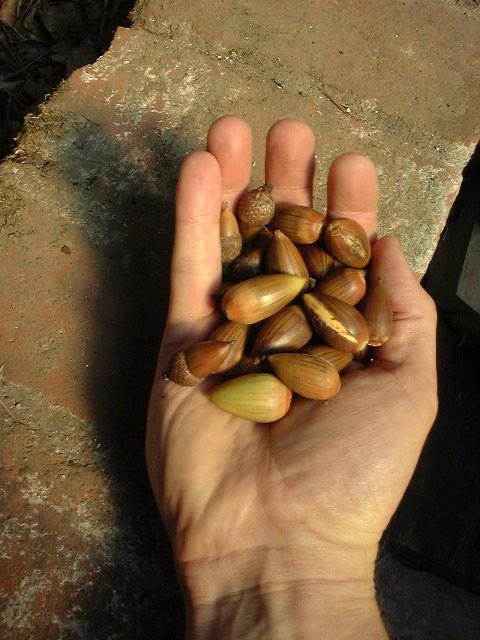 Did you ever wonder why a squirrel hoards nuts? How does he know to do that? Do the other squirrels get outraged when one squirrel has all the nuts and there are starving squirrels all over the forest? Everything considered "evil" (it seems) is acceptable in the survival of an animal - theft, hoarding, killing, even eating their own young. However, when we humans engage in this behavior there is a reactionary judgment and this reactionary judgment is caused by our morality - there is something that separates us from animals - religious people call it a spirit, atheists call it morality, spiritual people call it our soul - no matter what we call it (even god) it causes us to judge what is considered an otherwise natural reaction in our survival programming to be (now) bad. If we are the evolutionary products of some creator, and we required this animal programming to get to this stage (i.e in our survival from animals to an intelligent being), and we are then given conscious understanding of our actions (at some later level of intelligence), than the evil (our natural animal tendencies) served a purpose in getting us here. Killing, hoarding, stealing and the like all work perfectly well toward survival. And it would be perfectly understandable for this or that creator to have created both evil (natural instincts in survival) and good (a later ability to understand that these actions are now bad). The problem is not understanding all this but actually having some motivation to develop your morality in lieu of your animal. And most of us do not have the ability to recognize when we are stickily following our innate programs at the expense of the development of our morality. This is essentially what habits are - looping our programming. Serial Killers are really just running programs which are innate in our genetic code. Killing is perfectly acceptable to animals. Serial Killers have suppressed their concepts of right and wrong to satisfy a program. The way in which this program comes to fruition is through it’s use. Once a serial killer kills the program recognizes itself. Killing then becomes progressive as the serial killer’s mind is indicating that this program needs to run again (that is why it’s there). All programs we have seem to me to be progressive - that is the more we use them the more we need to use them. For example, people who engage in deviant sexual behavior like sado masochism are running programs concerning our innate genetic programs of dominance and submission as well as violence. The more they engage in this behavior the more they want to engage in this behavior often leading to behaviors which transcend fantasy (i.e. actual rape and killing). People who have a sense of moral outrage at specific immoral acts do so as they have developed their morality to a level which no longer permits one or more particular programs to take hold. Original sin is simply our genetic instinctual programs which without morality (often called god, spirit, soul, consciousness, etc.) would result us in simply being animals . Genetic code predisposes some individuals to have variations of the functionality of these programs. That is to say our genetic code predisposes us to use this program or that program more prevalently than it may be used by someone else. In short, we humans aren’t all that hard to figure out. It’s dealing with our inherent duality which is the tough part. The key I believe it to avoid behaviors which mimic our programming. Because engaging in these behaviors is, as I noted, progressive.
Saturday, July 08, 2006
North Korea Launches Some Conflict
 Like animals we humans like to defend out positions - even when they’re ridiculous. I don’t think it matters what we really believe - it’s all about conflict. That’s what the world is selling you in case you didn’t realize - they’re selling you conflict. In fact, when see a movie the principle element of that movie is conflict. Usually evil verses good or some offshoot of that principle. When you listen to some conservative talk show host talk about liberals with disdain - he or she is selling you conflict. What makes a sports rivalry great? The conflict creates the drama. Don’t we just love it when a fight breaks out at a baseball game? How about the show cops? Is it just the conflict that make us want to watch? So conflict sells as well as sex if not better. So what’s the problem with this? Well the problem is to varying degrees (based upon our genetic predispositions and environmental history) we humans are naturally aggressive. We are easily drawn in to conflicts (did you ever see a riot break out at a soccer game?). In fact, once we get started conflict is progressive. Take for (an easy) example the Middle East. I heard on the news today (it could have been any day) that more people were killed. Sadly today it was a 12 year old Palestinian girl. So there’s an inciting event and then more conflict and then another inciting event and then even more conflict and so on and so on. Conflict is naturally escalating and humans naturally escalate conflict. Did you ever get insulted? What was you’re first reaction? Were you ever robbed? What was your first reaction? When someone hurts us do we do the godly thing and forgive them or do we want revenge and satisfaction for what they have done to us? So the media (television, movie industry, news stations) are constantly selling us conflict almost like drug dealers. They’re preying on our genetic weaknesses and we fall for it like addicts. The Michael Savages and the Rush Limboughs of the world are really just connflict dealers and the people who call in to argue or side up are really conflict addicts. The news media not only sells you conflict it likes to show you pictures of the conflict so you’ll get even more hooked. Just picture a cocaine dealer showing you pictures of not the cocaine itself but what cocaine can make you feel like.
So we have all this conflict going on in the world and I have to wonder how the people in charge of selling it to you really feel about it? I mean without all this conflict what would they talk about? What would they sell us? I can picture some news media executive hearing the news about North Korea firing a few missiles and saying, “thank heavens, I thought they were going to back down”.
Wednesday, July 05, 2006
Johnny Depp’s American Stress Syndrome
 Not surprisingly, our great democratic right to vote is a sham because the candidates are all card board cut out of themselves. Do the millionaires of this country really represent the interests of the poor and disenfranchised just because they say they are liberal or democrat? How come some poor guy from Ohio isn't our president? They always own oil fields lately.
I realize that with the way we live in America we can and do find all sorts of sides to jump on (and that is our nature). We can call in every week on this radio station or another but there’s not a lot we can actually do to change anything. We are either powerless or apathetic. Patriotic of Anti-American. Conservative or liberal. And the guys in the suits just keep doing whatever they want anyway. Fed a higher standard of living we’re sort of like fat branded cows in the field who complain a lot but never get out of the pasture.
And so maybe this obtuse character Johnny Depp has it right? If you’re well off why would you want to be a part of all of this American Stress Syndrome? As soon as I make my first twenty million dollars I’m getting the barn next to Depp’s. Maybe he has satellite TV and I can still catch the Met games at his place? Johnny I'm home...
Sunday, July 02, 2006
Superman Returns Full Of Holes
 I’m not in the habit or reviewing movies, but I just saw Superman and need to vent. If you have not seen this movie and intend to do so, please do not read on as I give it all away. I usually have no problem dispelling my disbelief when I go to see a movie. However, some movies just insult even my most unimportant and unintelligent sensibilities. Superman is one of those movies that drives me nuts! Here’s a brief run down of all that’s wrong with the movie (and the poorly written script):
Lex Luther
In the movie Lex Luther somehow finds superman’s unguarded all powerful crystals (how does he find them and why are they unguarded?) and (after playing the Superman instructional video) decides to make his own continent by dropping them (like alka-seltzer) in the ocean off the coast of the United Sates. While Lex Luther understands the value of owning real estate, he apparently doesn’t see the problem with owning land that looks like parts of the moon since the land this process makes looks post-nuclear. He should have at least had a landscaper in his crew of three (yes three) bad guys. Also, as far as I can tell, when he decides to make his land mass he has just one helicopter (and a multi-gazillion-dollar disposable yacht that he abandons to be destroyed). Why not develop all the futuristic weapons that these crystals can supposedly provide (I bet they would be weapons with jagged edges) before you start making noise? Oddly he makes a new land mass in the ocean which ripples NYC and no one shows up to investigate! I knew our intelligence was bad but come on. Aside from these annoyances, while there’s mayhem all over the world Lex Luther and his cliche (oh it’s so sad when Superman get’s hurt) idiotic girlfriend use an out of control car to attract (distract) superman so they can easily steal the (rather common?) chunk of kryptonite that is coincidentally a story in the newspaper just when Lex needs it. Of all the (simultaneous) disasters in the world how did they know Superman would go for the loopy girl in an out of control car trick? After walking in to the museum and politely stealing the kyrptonite (did they really just kill the lights, break the glass and walk out?), he mixes it with the crystals and shoots it in to the ocean to make a sort of a Superman weakening land mass. Lex fails to kill Superman when he shows up and gets de-powered (I was waiting for the chain saw but instead he stabs Superman with a small piece of kryptonite and lets him float away in to non-kryptonite water with a small shard of krypto-meteor stuck in his side). Lex later entrusts the remaining super powerful crystals to the lap of his I’m-so-upset-this stuff-is-happening girlfriend who promptly dumps them out, and he and her finally end up on a (Gilligan’s) deserted Island the size of my back yard (good thing she took a sun umbrella on the helicopter). I also want to know what kind of he-almost-previously-annihilated-the-world-bad-guy has a double life sentence and gets off on appeal because a (post trial?) witness (here Superman) doesn’t show up - as an attorney it boggles my mind that Hollywood can’t at least get some paralegal to make up some plausible procedural explanation in a two hundred million dollar movie. In short Lex Luther and his jagged story line are hard to swallow.
Lois
We first see Lois aboard an airplane which is acting as the mule for a new space shuttle. I’m thinking the writers thought that they needed to have Superman save Lois and that they needed some exciting and spectacular vehicle to save her in. Ah, Boat? No, kind of boring.
Train? Eh, too mild. Airplane? Not bad, but..I got it! An airplane with a space shuttle launching on it’s roof. Cool! Over all, this Lois is beautiful (about time) and a little vulnerable - giving her character some sympathetic qualities that the prior portrayals failed to muster. As far as the love story (which is basically paramount here) we get the same old he-flies-her-around-town-in-the-moonlight cliche that is so tired even sappy romantics must have been bored.
Superman
The big guy! The back story here is that Superman leaves for two years to see if his home planet is still out there when (earth?) astronomers think they may have seen it. My first thought was, Superman flies in outer space and he thinks our astronomers can figure out if his planet is out there? Why didn’t he just fly out to the hubble telescope himself with his super eyes and take a look? Did he need to fly to the door step of Krypton or could he see it was gone when he was half-way there? During the movie Superman learns that the crystals are gone, that the electrical power grid has been blacked out, and that a meteor was stolen from the museum, and yet he never seems to put two and two together - sort of wondering around waiting for things to happen before he reacts. Despite his super vision he can’t see the green glowing material in Lex’s new land mass and flies right in like some sort of pizza delivery guy. Neither a thinking man nor a proactive force are you Superman? Included in this movie is the out-played he’s-a-boy-running super-fast-through-the-corn-fields-and-jumping-on-barns starter kit. What the heck? Two hundred million plus dollars and they bring us back to the corn fields to watch super-boy barn hopping? I’ll just say, I’m available to write scripts if anyone needs me.
Unlike the Spiderman movies were each plot point and event in the movie has a rational relationship to the characters and the story, this movie fails to remain connected. With it’s very simplistic plot, it’s basically just a sappy love story wrapped in a few eye catching action scenes.
Wednesday, June 28, 2006
To Believe Or Not To Believe - That Is My Question
 "Now the mind is a very peculiar instrument in that once it picks up an idea from any source, from the worst possible source, once a mind picks up an idea, it tends to become possessive over it. It tends to say, 'Ah, this is my idea.' Then it goes to the next stage and says, 'This is not only my idea, but my life depends upon following it, believing it, protecting it.' And regardless of how nonsensical, how self-destructive these ideas may be, human beings will fiercely protect them thinking - listen to this please - thinking that they are protecting their own life when all it is is picking up a collection of ideas that have made them what they are today."
--Vernon Mowisdom
What is it about a belief (especially a religious belief) that causes people to be unable to have a rational unemotional discussion about the validity of that belief? The normal reaction to any attempt to confront a strong ingrained belief, even those based upon nothing other than pure repetition (or those acquired without any independent thought) is to reject any alternative idea without much (if any) consideration. “No, no, I don’t want to hear it” or “what I believe is true and that’s final”, are the boiler plate responses often given. Alternatively, some people offer up their beliefs like dirty laundry. Suddenly they’re shaving their heads in some cult drinking Kool-Aid. The reason I believe each of these phenomenon’s occur is basically the same. In the first instance your biological programming tells you instinctively to defend your position (if you are so genetically inclined). You can not accept rational thought as your pack mentality programming clicks on and tells you to reject any other position and defend yours ("must reject and defend"). In the second instance, your submissive program (as that may be alternatively dominant in your genetic make up) tells you you must follow this new exposed point of view. To be able to overcome these programs and offer your open mind is difficult to varying degrees based upon your current situation (did your granmother just die?), your genetic make-up (random really), your age, your experiences (or environmnet) and your intelligence. For instnace, the younger you are the more easily you are influenced - you are often a blank slate without a belief one way or the other. Similarly, the less intelligence you have the easier you are influenced. So basically a belief operates like a kind of virus - seeking out the weak, moving from the dominant in the world to the submissive in the world. When it encounters and experiences a grounded intelligent person who can control his animal tendency to either be dominant or submissive, it get’s a real examination under a microscope and dissected toward a rational acceptance or rejection.
How does one then (if they have an alternative position with some substance) approach the average (instinctual) religionist or agnostic or atheist in order that they may listen to a new rational and meaningful position with an open mind? And then how does the necessary approach lead to a belief change on a global scale? My best guess is that the place to acquire some belief changing skills is to look at the past where these changes have actually occurred. And the first question that needs to be asked is “how did belief systems change historically such that they became ingrained on a large scale?” It seems once a belief catches one (even minimally) it can gain momentum and spread. We teach our beliefs to our children (who like clay take most belief systems at face value no matter what they are told). As a result they become further intrenched without the requirement of any further examination or thought. Essentially a changing belief system on a global scale is like a small snow ball running down a mountain. If you can create that small snow ball belief and roll it down that mountain, it might gain momentum as it is further presented to children and other people by the people they look up to and/or trust (professors, clergy, holy men, your parents as some examples). Since the examples of large or global changes in people’s belief systems are numerous, I’ll make this an on-going blog - revisiting it with new examples and maybe some new insight. Believe it or not I’ll start with examples of the historical past and work my way up all the way to the modern-day belief molding experts (Rush Limbaugh comes to mind). Stay tuned.
Tuesday, June 27, 2006
Patrick Kennedy's Historical Drive In To A Barricade
 I was watching the history of the Roman Empire on (of course) the History Channel yesterday. And it basically was the story of one dysfunctional or corrupt or tyrannical Emperor after the other (and the power hungry women who loved them) and I got to thinking - why do we expect so much from our modern day politicians? Clearly the Roman emperors had (in a joint sense) every bad quality a person put in power could ever have - they often womanized, the often killed (some killed a lot), and they often took advantage. In short, they mostly just took advantage of their positions of power. They got the six-on-the-side-lovers, the special in-palace-running-water, and the right to exercise their natural and dominant tendencies to be in charge (I learned that Emperor Claudius had no such tendancies - he hid behind a curtain after Emperor Gaius was killed by his own guards and was then literally forced to be the new Emperor).
 So here we are in this modern “civilized” society (my kids have a Sony Play Station) and we expect so much from our representatives. We demand their integrity and honesty. And we’re so outraged when they get caught playing Emperor. But why? On the basis of what? Has man’s morality really evolved all that much since the Roman Empire? Wasn’t it just a handful of decades ago that a guy maned Hitler tried to forcibly and violently take over the world? So our guys (and I live in America but your guys in other so called civilized nations should easily follow the paradigm) are suddenly going to change from historical trends and not only really CARE about the people, but care enough to focus on the people’s needs and not their own? What a joke. When politicians get caught taking bribes, smoking pot, killing someone (how many people do you know personally who die under mysterious circumstances?) or shacking up with their sixteen year old intern, it’s nothing but the HISTORICAL NORM. They’re just following suit. It’s only by the sheer fact that they’re no longer held above the law that they don’t OPENLY engage in the Roamesq things of the past. In fact when they do get caught they seen to find ways to use their positions to get out of trouble anyway. I wonder what would happen if a guy named Rocco Fabricchi the plumber from Brooklyn ran his beat up Toyota in to his neighbor’s fence and then said, “Oops I took some sleeping pills and don’t remember a thing.” What about if you ran your car off a bridge with your brother’s former secretary in side and left her to die? You do nothing for nine hours and they charge you with nothing but “leaving the scene of an accident”? Would they just charge you and me with “leaving the scene of an accident”? Or would you get at least a vehicular or negligent homicide charge? Well you get the picture. The new age politicians are doing just like the Roman Emperors - they’re just doing it quietly in the background with a nice custom made suit. We need o learn from human history and stop expecting so much.
Monday, June 26, 2006
Where Is My God Warning Before I Screw Up?
 One might ask why we should not expect god to be at least as reasonable and compassionate as the average person? Take a simple scenario that was given to me on a yahoo group: You are in the kitchen. You see a toddler headed towards a stove where a pot of oil bubbles away furiously. He reaches up... do you sit there and watch him do grievous harm to himself when he pulls it down, thinking pain, fear, scarring or death are just rewards for wanting to know? Or do you get up and pull him to safety? This is a good one. Where’s god;s warning when people are nearing unknown but certain danger? Here are my ideas: First, it is possible that the value system that is placed on this equation is meaningless in relation to some HIGHER PURPOSE? Perhaps the history of death and pain and suffering is a spit in the pan compared to what the ultimate goal is? Does a mother focus on the pain of child birth when she first holds her infant in her arms? Or is she elated with the result such that the pain becomes meaningless? Chaos, pain and suffering are inherent propensities in this system, but in the evolution of biology toward man they were certainly necessary components of the equation. Unlike the animal, whose pain is a conditioned response mechanism, man (now conscious) has an understanding of these things. He understands pain, suffering, mortality. Now he must suffer the consequences of that knowledge. But given the loftier goal of creating new personalities, perhaps the awareness of the chaotic nature of our environment and the pain and suffering and death we know in our conscious states is well worth attainment of another goal? In other words, maybe the means justify the end. Quite possibly not even the intervention by God would change the final outcomes. Secondly, this scenario assumes god can intervene. I believe god is just another word for perfection or morality and that saying that god could grab the infant or give him some warning is the same as saying your morality could grab the infant and save him. You (being moral or godly) want to save him because you have god (morality) within you.
Friday, June 23, 2006
Christianity is Just a Remake
 The story of Christianity has been around for thousands of years and is just a retold story of what was known by ancient peoples - with a nice twist. How far back does it go - probably the Sumerians. If we look at the Egyptians they told the same story. In the Egyptian story of creation, Seth is the god of confusion, and represents chaos and disorder, the constant and eternal challenge to the order of creation. Seth (or Set) is shown with an animal's head with a long curved pointed snout, slanting eyes, and square-tipped ears to exemplify animal biology which sprang from chaos. As the story goes, Seth made a beautiful box, namely biological man, which like a "coffin" is made to the exact measurements of Osiris, which is in fact representative of man's soul ("I am Yesterday, "and I am Today ; and I have the power to be born a second time. I the hidden Soul create the gods, and I give sepulchral meals to "the divine beings in Amenti and in heaven." - Osiris as described in the Rubric to one of the versions of the lxivth Chapter of the Theban Recension of the Book of the Dead). However, Isis saves man's soul (Osiris). The name Isis means 'Knowledge'. And like in the story of Adam and Eve, this knowledge is represented by a snake like creature, here Isis creates the first cobra and uses it's venomous bite to coerce Ra (Or God) into revealing consciousness to man (in Egyptian lore to coerce Ra to reveal his "secret name"). What this really means is that at some level of intelligence consciousness arose. Early Christian equated Isis to the Virgin Mary as she, like Isis, is symbolic of nothing more than wisdom which led to knowledge which in turn led to consciousness, or the symbolic birth of Christ (the equivalent of Osiris, or man's soul). Christ (or your soul) is created through a virginal process (there was no mother and father just a mother - knowledge) whereby man obtains the feminine knowledge (Isis is also known as the "Immaculate Lady," "Queen of Heaven," "Illustrious Isis, most powerful, merciful and just," titles transferred entire or with slight change to the Virgin-Mary. This same symbolic representation is found in a host of other stories and in those she is called Ishtar, Astarte, Venus, Diana, Aurora, Aphrodite, etc.) . As a side bar, the Egyptian god Horus (a winged falcon which carries a red disk, also represented by the Eye of Horus. See as a biblical example "The Sun of Righteousness has healing in His wings. Mal. 4:2.) symbolizes your souls flight in life - or the point of it's origin in consciousness. An Egyptian tablet describes him as the "substance of his father," of whom he is an incarnation and identical with him (sound biblically familiar?) As I stated earlier Horus (consciousness) was said to be born on 25 December, while Osiris (your soul or Christ) was born of the virgin Isis (also known as Mata-Meri or Mother Mary) on 6 January - 12 days later ("a bright cloud overshadowed them, and twelve rays as of the sun broke forth from behind the clouds, and a voice came out of the cloud, saying, "This is My beloved Son with whom I am well pleased. Listen to Him" - Mormon Gospel of the Holy Twelve). In some cultures, especially Hispanic and Latin American culture, January 6th is observed as Three Kings Day, or simply the Day of the Kings. How about the 12 days of Christmas - the twelfth day (January 6) being when the "wise men" (get it) show up? Not surprisingly the word "Christ" means sun-savior. Jesus is from Hebrew "Yeshua," savior, and Christ may be traced to the Chaldean "chris" = sun [Greek: christened]. Also, the physical Church was founded by Constantine, and that it was a part of his decree "that the venerable day of the Sun should be the day for the worship of Jesus Christ as Sun-day" (his quote). FYI, here's what the Egyptians had to say about following religious traditions as it applied to your soul (Horus in flight): "Learn with the eye of discernment where you wish to travel to! Do not be guided by some teacher, some book, some tradition. Your soul's flight is too important to be dominated by another's guidance, however noble. Your only true guide is yourself, that spark of which you inherit like Myself from the Divine Body of Nuit, Mother of All. My Golden Eye is within your own self. It is the eye of truth" - Oracle of Horus the Golden Eye
Thursday, June 22, 2006
Pavlov's Dogs and Cell Phone Usage
 THE PROBLEM WITH CELL PHONES is that they are invasive. There was a story about a Wise Man who was in his living room with a Young Boy. There came a knock on the door and the Wise Man sat without moving. The Young Boy asked, "aren't you going to answer the door"? To which the Wise Man replied, "If I answered the door every time I heard a knock I would be as simple as Pavlov's dogs. And fortunately I am the ruler of my choices". This of course got me thinking about my cell phone. Every time the thing rang I would pick it up. I could be in the middle of eating and I stopped to pick it up the phone. Like a mindless robot. So I stopped answering it all together - I let everyone leave a message and I call them back AT MY CONVENIENCE. And of course everyone (and I mean everyone) complains about how they can never get in touch with me. WELL FOR ALL OF YOU COMPLAINERS HERE ARE MY CELL PHONE RULES:
(A) if you call me private or your name doesn't come up on the little blue screen - I'm definitely not picking up your damn call - when I answer the door I ask "who it is" - I'm certainly not opening it if there's a sign there that says "PRIVATE" - as for all of you privacy nuts that are afraid if your number or name comes up on someone else's phone the CIA may get a hold of it and drag you off to their SECRET DETENTION CENTER in New Mexico - this is the price you must pay. Leave me a message and I might call you back;
(B) To the other 48 people a day whose names actually come up on the little blue thing - if I don't pick it up one of four things is happening (1) I don't want to talk to you (and you probably know why) (2) I am in the bathroom - you know this cell phone things ain't water proof - and I never carry it in there - why would I? Do you want to hear me urinating in the background? No? Well I don't want to hear your ideas while I'm lathering up either (3) the battery is dead - stop calling so much and we can eliminate this problem (4) I'm sleeping - sometimes I even sleep during the early afternoon.
Just remember: I'm no dog - I'll call you back when I get a chance (or when I feel like it).
Did God Want Terrorist Al-Zarqawi Dead?
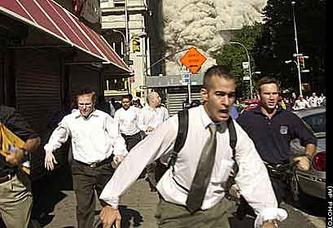 SO MANY BAD THINGS ARE HAPPENING lately I thought it would be a good way to start my Blog with a little (light) discussion about a god who could cause or permit suffering and death and destruction of innocent people. And answer the question of whether or not god is a loving god? Where is god while people and natural disasters are causing suffering (through acts like terrorist bombings)? Do terrorists deserve to die in acts of revenge? Does god want us to kill our enemies? Taking my moral short-comings aside I did a little research and hope you'll entertain my thoughts:
Man’s penchant is usually to give "god" human qualities. The focus is primarily on some divine power with white hair and human emotion- because this is what people have been shown god is through the "hot iron of tradition" (1 Tim. 4:2). Atheists are no better at releasing their prejudices of what god may or may not be in this regard than would be a fundamentalist. To give god human qualities and define god as "angry" and "revengenful" seems to be the norm. That's why I think the word god is a poor choice to begin a discussion. It's a bad start to any debate. So let's define god as morality - or simply as "the love within us". In this way we vitiate the image of god as some man-power that would neglect a child, or watch a person suffer in agony. This love within is (often) devoid in many people - these are the animals, these are the destructive individuals without some compassion for the rest of us. I believe the capcity for good and evil is within us all and you find proof of good every time you guide a helpless old lady to safety across a crowded intersection, give a homeless person a meal, or even stop to pet a dog. And so the world is often an imperfect place wrought with evil and devoid of justice for good people who suffer at the hands of that evil . However, these atrocities are not the result of some actions by god (or even zeus). The bible indicates that the injustice of it all shall be set straight at some later time:
"If God be just, there will be a day of judgment. Now things are out of course; sin is rampant, saints are wronged, they are often cast in a righteous cause, they can meet with no justice here, justice is turned into wormwood; but there is a day coming, when God will set things right; he will do every man justice; he will crown the righteous and condemn the wicked. 'He hath appointed a day..." (Acts 17:31).
If (notice the word "if" in sentence one") that's the case than seeking justice here and now may be inconsequential. And there's some potential pay day for being good.
Does that mean we should permit our enemies to harm and injure (and even kill) us here and now without response? Well, in the bible we also find the story of David. The King of Israel, King Saul, "sought him every day" despite the fact that he had spent years heading the Israelite army fighting for Saul. The King motivated by his jealously of David's status as hero alone wanted to kill him. While David hid in the hills, Saul controlled his wife, his children, his best friend Jonathan, his property and his "name." In the king's court. David's name slid quickly from conquering hero to mud. YET when presented with an opportunity to kill Saul, and against all human nature, David chooses mercy instead of justice:
"David's heart smote him," for what he had done to Saul (I Samuel 24:5). "The Lord forbid that I should … stretch forth mine hand against him, seeing he is the anointed of the Lord."
What does this mean? Is justice as important as morality and doing what is right? Are even the worst of us "anointed" with god (good) inside? Again, the focus with many people is on what the rest of the world is doing - the focus needs to be on the good that we see in people - the good that people become. The choice between justice and vengeance or correctness in moral choices is a better focus than the evil in the world - but then I suppose that’s just my opinion. I know we want justice but what we really need is an (almost impossible to understand) ability to forgive and to help our enemies. This is, of course, what made David great - his uniqueness and seperation from an otherwise natural animal response. Maybe this is sorely lacking in our society?
Subscribe to:
Posts (Atom)